How to Grill Fish for Juicy, Flaky Fillets Every Time
Grilled fish beats almost any weeknight dinner. You get smoky flavor, crisp edges, and a meal ready in under 15 minutes. The trick sits in a few small details, and I want to share mine with you.
I ruined plenty of fillets before I got this right. Fish stuck to the grates. Delicate pieces broke apart. Some came out dry and sad. Once you fix a handful of things, though, grilling fish turns easy and repeatable.
Let me walk you through everything. By the end, you will grill fish with confidence.
Why Grilling Fish Feels Tricky (and How to Fix It)
Fish scares a lot of cooks. The flesh is soft and lean. It cooks fast and clings to metal. One wrong move and dinner falls through the grates.
Here is the good news. Fish behaves predictably once you understand two things: heat control and moisture. Nail those, and the rest follows.
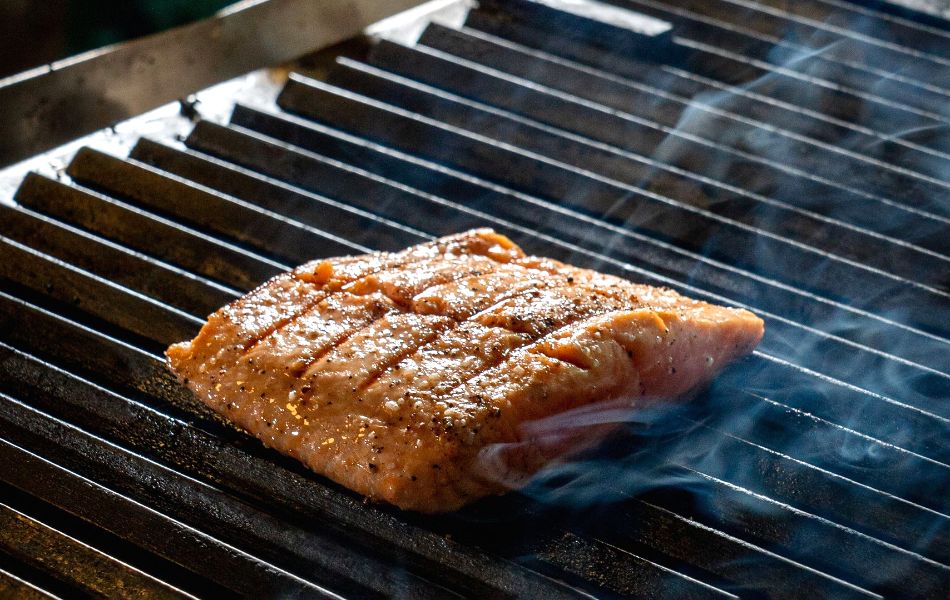
The most common mistakes are simple to avoid:
- Cold grates. Fish sticks when the grill runs too cool.
- Wet fish. Extra surface water steams instead of sears.
- Too much flipping. Fish needs time to release on its own.
- Thin, flaky types on open grates. Soft fish falls apart fast.
Fix these, and you solve most grilling fails.
Pick the Right Fish for the Grill
Not every fish loves direct heat. Firm, meaty types hold together best. Thin, flaky ones need extra support or a barrier.
Salmon works as a superstar on hot grates. Rich natural oils keep the flesh moist even if your timing slips. Swordfish and tuna hold together like sturdy steaks. Mahi-mahi and halibut offer dense textures that handle flipping well.
Whole fish like snapper or sea bass bring lovely flavor too. The skin protects the tender inside while the bones add structure. Save trout, tilapia, sole, and flounder for foil, a basket, or a plank.
When you shop, look for clean smells and firm flesh. Press a fillet with one finger and watch for a quick spring back. Frozen fish works well after a full overnight thaw in the fridge.
| Fish Type | Grill Temp | Time Per Side | Internal Temp |
|---|---|---|---|
| Salmon | 400°F | 4–5 min | 145°F |
| Tuna | 450°F | 2–3 min | 125°F (rare) |
| Swordfish | 400°F | 5–6 min | 145°F |
| Mahi Mahi | 400°F | 4–5 min | 145°F |
| Halibut | 375°F | 5 min | 145°F |
| Shrimp | 400°F | 2–3 min total | opaque |
A good rule of thumb: grill 8 to 10 minutes total per inch of thickness. Flip once at the halfway point.
Prep Your Fish and Grill Before You Start
You do not need fancy tools. A few basics make the whole process smoother.
Your short prep checklist:
- Scrub the grates with a wire brush while warm.
- Pat the fish dry with paper towels.
- Brush oil on both the fish and the grates.
- Season right before cooking.
- Heat the grill to medium-high, around 400°F.
Drying the fish matters more than you think. A dry surface sears fast and builds a golden crust. Wet fish steams and turns rubbery.
For oil, reach for a high smoke point choice like avocado, grapeseed, or canola. Skip extra virgin olive oil for the grate, since low heat tolerance brings bitter flavors. Save the good olive oil for a finishing drizzle.
My personal habit: I oil the grates twice before the fish goes down. Once when they heat up, and once right before I lay the fillet. This double layer stops sticking almost every time.
Set Up Heat Zones for Even Cooking
Steady heat gives you the best results. Build two zones on your grill for full control. Set one side to high heat and leave the other side low or unlit.
Direct heat sears the outside and crisps the skin. The cooler side finishes thick fillets gently, with no burning. This setup also saves dinner when flare-ups strike.
Dripping fish fat causes sudden flame bursts. When flames jump, slide the fish to the cool side and close the lid. Trapped heat then roasts the fish like an oven.
How to Grill Fish Step by Step
Here comes the main event. Follow these steps and your fillets will slide off clean and juicy.
Step 1: Heat the grill fully. Give it 10 to 15 minutes to reach temperature. A hot grate sears the fish and creates a natural non-stick surface. Skip this, and everything sticks.
Step 2: Season with a light hand. Start with salt, pepper, and lemon zest. Add smoked paprika, garlic powder, or dried oregano for depth. Strong flavors compete with the fish, so keep things simple.
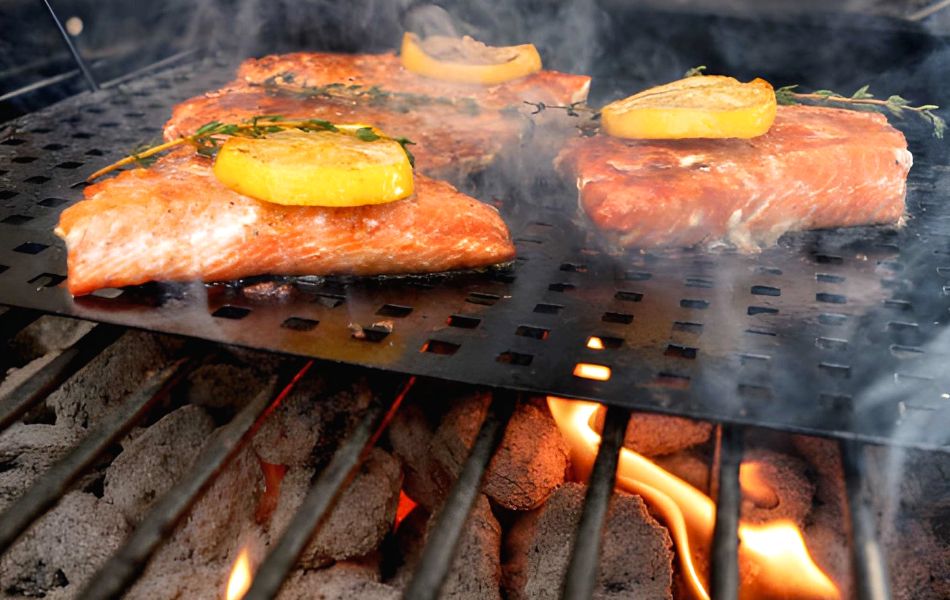
Step 3: Place skin side down first. The skin protects the flesh and holds the fillet together. Lay the fish across the bars, not along them, for support and pretty marks. Now leave the fish alone and let a crust form.
Step 4: Flip only once. Slide a thin metal spatula under one edge. When the fish lifts with no resistance, turn it in one calm roll. When it clings, wait another 30 seconds.
Step 5: Cook the second side less. Most fillets need about two-thirds of their time on the first side. This protects moisture and reduces breakage.
Step 6: Check for doneness. The flesh turns opaque and flakes with a fork. Pull the fish a touch early, since heat keeps working after you remove it.
The Right Way to Flip Fish
A wide, thin metal spatula gives you the best control. Slide the whole tool under the fillet, not one end. Support the top with tongs when needed, using gentle pressure.
Never squeeze the fish with tongs. Firm gripping pushes out juice and breaks the soft flesh. Handle each fillet like a fragile slice of cake.
For a large salmon side, grab two spatulas. One supports the center while the other supports the tail. This small move prevents a dramatic split at the grill.
Use a Thermometer for Confidence
A food thermometer removes the guesswork. Slide the tip into the thickest section from the side. This angle reaches the center without pushing through the bottom.
| Doneness Level | Target Temp | Flesh Look |
|---|---|---|
| Medium-Rare | 120°F–125°F | Translucent center |
| Medium | 130°F–135°F | Opaque, moist flakes |
| Well-Done | 140°F–145°F | Fully opaque, firmer |
The USDA recommends 145°F for fish. Tuna and swordfish taste great with a pink center, while salmon stays rich at a moist middle. Rest the fish for three minutes, then serve before it cools.
Foil, Baskets, and Cedar Planks for Delicate Fish
Soft fish needs backup. Three tools help you handle flaky fillets with ease. Pick whichever suits your night.
Foil packets suit busy weeknights. Set the fish on a large sheet, then add oil, herbs, lemon slices, and vegetables. Fold the edges tight, leaving a little room for steam. Cook over medium heat for 8 to 12 minutes, then open with care as hot steam rushes out.
A grill basket holds the fish in place and lets smoke reach the surface. You get grill marks and easy flipping. This works well for whole fish and small fillets.
A cedar plank gives salmon gentle smoke and easy handling. Soak the plank in water for at least one hour first. Set the fish on top over medium heat and close the lid. Most fillets need 12 to 18 minutes, and a spray bottle handles stray flames.
Marinades, Seasoning, and Sauces
Fish absorbs flavor faster than chicken or beef. Fifteen to thirty minutes suits most marinades. Longer soaking turns the surface soft, especially with citrus or vinegar.
For a balanced marinade, mix one tablespoon acid with three tablespoons oil. Add garlic, herbs, salt, and pepper. On a rushed night, skip the soak and brush the fish with seasoned oil instead.
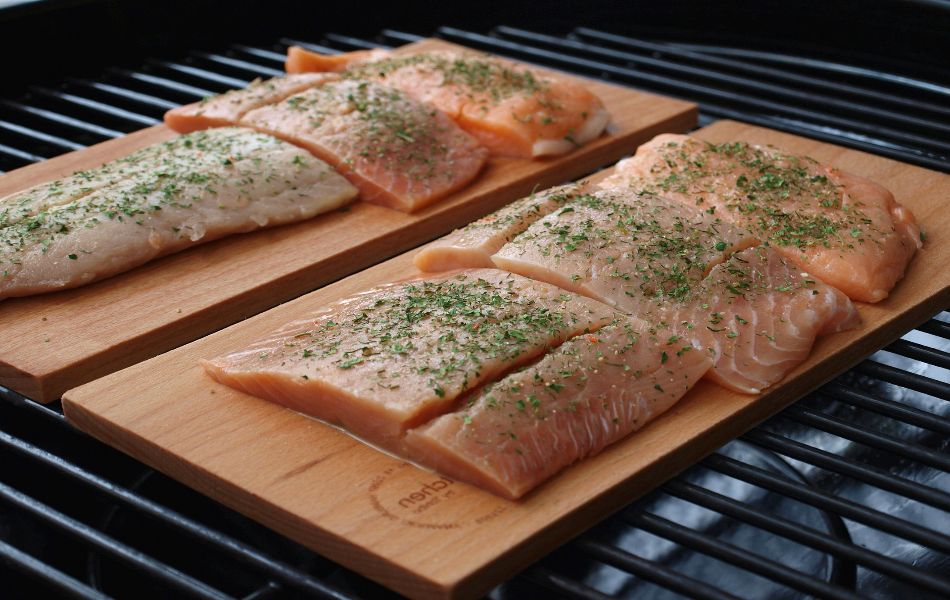
Hold sweet glazes until the final minute or two. Honey and barbecue sauce scorch fast over direct heat. Fresh herbs like dill, parsley, and cilantro belong at the end, so they stay bright.
A quick sauce turns simple fish into a full meal:
- Herb oil: chopped herbs, olive oil, lemon juice, garlic, and salt.
- Yogurt sauce: plain yogurt with dill, cucumber, lemon, and salt.
- Brown butter: butter cooked golden with capers and lemon juice.
I love a compound butter with garlic and dill. I set a slice on the hot fillet and watch it melt into the flakes. The flavor sinks into every bite.
Common Mistakes and Quick Fixes
Even simple recipes trip people up. Watch for these snags, since each one takes seconds to fix.
- Fish sticks to the grate. Leave it alone one more minute. A browned crust releases on its own.
- Outside burns before the center cooks. Move the fish to the cool zone and close the lid.
- Fillets dry out. Pull them a few degrees early and check thin ends first.
- Fish falls apart. Reach for a basket, plank, or foil with fragile pieces.
- Cold fish cooks unevenly. Let fillets sit 15 minutes at room temperature before grilling.
Once you learn how to grill fish without these mistakes, dinner turns stress-free. You spend less time worrying and more time enjoying the results.
Serving Ideas for Your Grilled Fish
Once the fish comes off, build a plate around it. Fresh, light sides match the smoky flavor best. Keep things quick and colorful.
Easy pairings I return to often:
- Grilled zucchini, peppers, or asparagus
- A crisp green salad with citrus dressing
- Rice pilaf or fluffy couscous
- Warm corn tortillas for fish tacos
- Roasted potatoes with herbs
Fish tacos are my weekend favorite. I flake grilled mahi-mahi into warm tortillas. Add slaw, lime, and a spoon of chipotle sauce for a fast crowd-pleaser. A crisp white wine, like Sauvignon Blanc, rounds out the whole plate.
Final Tips for Grilling Fish Like a Pro
Grilling fish rewards a few smart habits. Hot grates, dry fillets, and one clean flip carry you far. The rest comes down to timing and a little patience.
Start with a firm fish like salmon. Practice the release and the flip until they feel steady. Then play with marinades, planks, sauces, and spice blends.
Now you know how to grill fish that stays juicy, flaky, and full of flavor. Fire up the grill this week and put these tips to work. Your next fillet will beat any takeout plate.